
Tips & Advice
What Makes a Custom Architectural Accent Wall Different From Traditional Wall Décor?
August 17, 2026
When most homeowners think about decorating a large, empty wall, the first ideas that come to mind are often familiar ones: hang a large mirror, display a favorite painting, create a gallery wall with framed family photos, or add shelves filled with decorative pieces.
All of these options can make a room more attractive. But a custom architectural accent wall does something very different.
Instead of simply adding décor to a wall, a custom architectural design can turn the wall itself into the artwork.
That distinction is at the heart of the custom accent walls I create. My goal is not simply to fill an empty space. I want to create something original that complements the room, reflects the homeowner's personality, and gives people a reason to stop and take a second look.
Sometimes, they look much longer than that.
A Custom Architectural Accent Wall Becomes Part of the Room
Traditional wall décor is generally added after a room has been designed. You paint the walls, arrange the furniture, and then decide what to hang in the remaining empty spaces.
A custom architectural accent wall takes a different approach. The design becomes an integral part of the room itself.
The size and proportions of the wall matter. So do the colors in the room, the surrounding architecture, the furniture, the lighting, and even the location from which people are most likely to see the finished design.
This allows an ordinary wall to become a true focal point.
A foyer is a great example. Because it is one of the first spaces guests experience when they enter a home, an original architectural accent wall can immediately establish the personality of the home and create a memorable first impression.
One of my favorite projects demonstrates this perfectly.
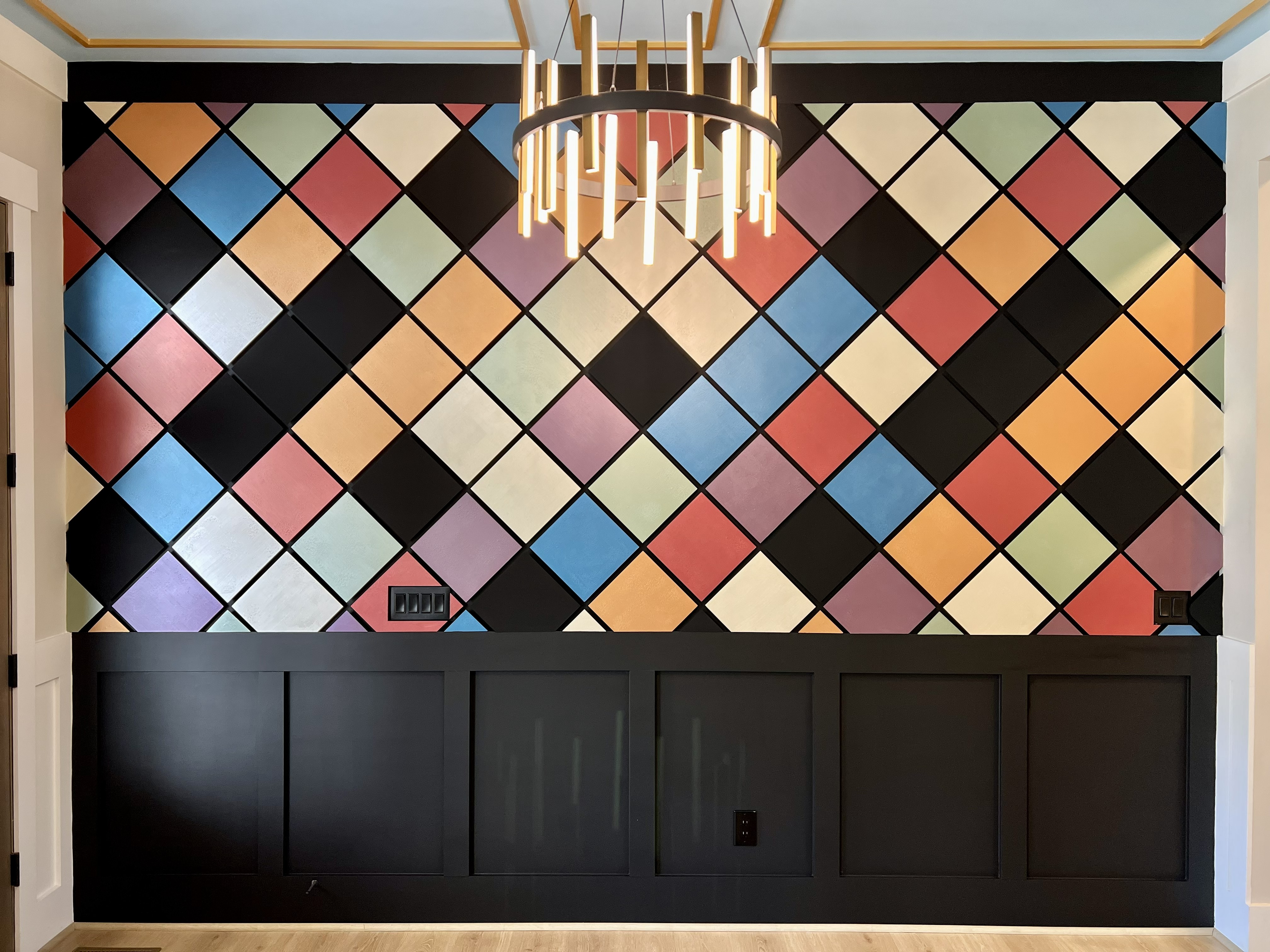
The foyer features a dramatic wall composed of individually created diamond shapes in a variety of colors, including shades of blue, red, orange, green, cream, and purple. The colorful geometric design is contrasted against black elements and a black architectural treatment along the lower portion of the wall.
Careful spacing between the individual diamond shapes adds subtle depth and dimension to the design.
The result is bold, colorful, and unexpected.
In a home where many of the surrounding walls are more neutral, this wall immediately commands attention. You don't need to find a painting or mirror to hang on it. The entire wall has become the artwork.
Custom Means the Design Starts With the Homeowner
One of the biggest differences between custom architectural wall art and traditional wall décor is the creative process.
When I begin working with a homeowner, one of the first things I want to know is whether they already have an idea of what they want.
Sometimes they do. Other times, they simply know they want something different.
A homeowner might show me examples of shapes, patterns, colors, or styles they like. Those ideas can become the starting point for an original design.
From there, I can begin sketching ideas, suggesting colors, and thinking about the materials that will work best for the design and the space.
The goal isn't necessarily to reproduce a picture someone found somewhere else. Inspiration can come from many places, but the opportunity is to take those ideas and create something that works specifically for that homeowner and that particular wall.
That is part of what makes custom work so interesting to me. Every space presents a different opportunity.
The Difference Is in the Craftsmanship and Details
A finished accent wall may look effortless when you stand back and view it as a whole. What you don't always see is the amount of thought and detailed work required to create it.
Precision matters.
Individual pieces may need to be carefully measured, cut, positioned, stained, or painted. The spacing between elements can be just as important as the elements themselves. Small differences can affect the symmetry, depth, and overall visual impact of a geometric design.
Material selection matters as well.
Wood and other materials have their own characteristics and limitations. Part of the challenge is understanding how a material behaves and determining how to use it to achieve the intended effect.
In some of my projects, that has meant making hundreds of small, precise cuts to allow a material that is normally stiff to become flexible enough to achieve a particular design.
That is where craftsmanship and creativity have to work together.
Knowing how to build something is important. Knowing how to look at a material and imagine doing something unexpected with it is something else entirely.
Some Walls Are Designed to Make You Look Twice
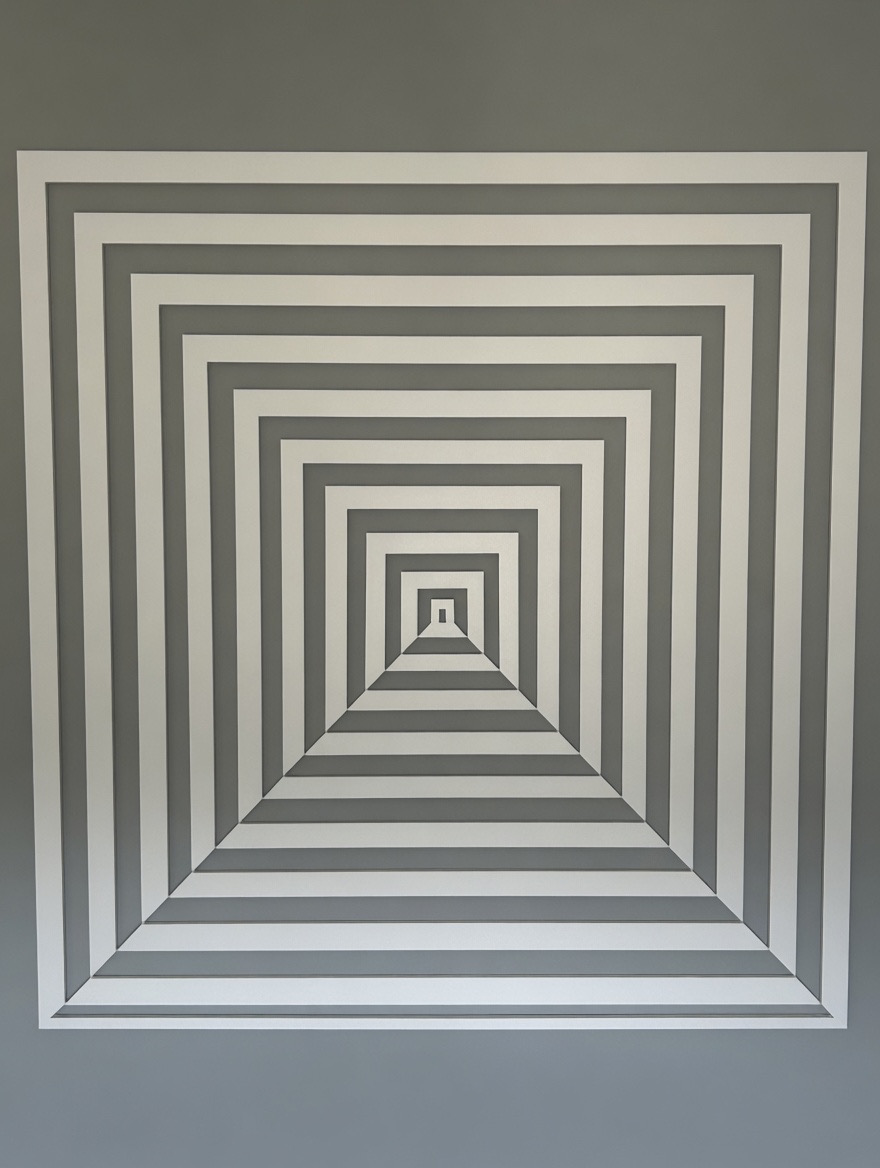
One type of design I particularly enjoy creating involves optical illusions.
These walls aren't necessarily experienced the same way by everyone—or even from every position in the room.
As you change your viewing angle, the design may appear different. If you continue looking at it, you might suddenly notice shapes you didn't see at first. Squares may seem to reveal triangles, or geometric patterns may appear to move inward or outward.
That interaction between the artwork and the person viewing it is part of what makes these projects so interesting.
A traditional framed picture has defined boundaries. You look at the artwork hanging on the wall.
With an architectural optical-illusion design, the experience can be very different. Your eye moves across the wall. You begin following lines and shapes. You change your position. You discover something you didn't notice a few seconds earlier.
The wall invites you to participate in the experience.
Original Wall Art Can Become a Conversation Piece
One of the best compliments a craftsman can receive is hearing that people are talking about his work after the project is finished.
I recently created and installed a custom wall project in a homeowner's dining room. After the installation, the homeowner told me something that I think captures the impact custom architectural wall art can have.
Neighbors had heard other neighbors talking about the wall.
Then they started asking if they could come over to see it for themselves.
Think about that for a moment.
They weren't coming over to see a new mirror. They weren't asking to see a collection of framed photographs.
Word about this wall had traveled through the neighborhood to the point that people wanted to come into the home specifically to experience it in person.
That's what a true conversation piece can do.
When a design is original and unexpected, people remember it. They talk about it. They ask questions about how it was created.
For a homeowner who wants something distinctive rather than something that can be purchased from a catalog or ordered online, that uniqueness can be an important part of the appeal.
A Custom Accent Wall Reflects the Homeowner's Personality
Your home should feel like your home.
There is certainly nothing wrong with purchasing a beautiful piece of traditional wall décor. The challenge is that the same painting, mirror, or decorative object may be hanging in hundreds or thousands of other homes.
Custom architectural wall art offers an opportunity to create something much more personal.
The homeowner might prefer bold colors and dramatic geometric patterns. Someone else may want natural wood tones and a warmer feel. Another homeowner might be drawn to clean lines, symmetry, dimensional effects, or an optical illusion that makes guests stop and wonder how it was created.
That's why the design process matters.
Some of the questions that can shape a custom project include:
What colors does the homeowner love?
What shapes or patterns appeal to them?
What is the overall style of the home?
How dramatic or subtle should the finished wall be?
Where is the wall located?
From which directions will people typically view it?
What materials will best accomplish the desired effect?
How can the design complement the room while still standing out?
There isn't one correct answer because there isn't one perfect accent wall for every home.
That's the point of custom work.
Creating Architectural Wall Art Requires More Than Traditional Contracting Skills
My professional background is as a trained electrician, but I have also had a passion for working with wood and creating things for many years.
For more than a decade, I have developed my woodworking skills through hands-on experience, self-teaching, observation, and simply continuing to challenge myself with new ideas. I've built cabinets and custom built-in shelving, along with the original architectural wall projects I create today.
That experience has taught me a great deal about materials and construction.
But I believe creating original architectural wall art requires another skill as well: having an eye for what something could become.
There are many talented people who can build cabinets, install shelving, or complete a home improvement project according to a set of plans. Creating an original piece of architectural art requires you to think differently.
You have to be able to look at a blank wall and see possibilities.
Then you have to figure out how to turn that idea into something that can actually be built.
I personally work through the creation of my projects, from developing the design and selecting appropriate materials to building, staining, painting, finishing, and installing the work.
It's that combination of creativity, attention to detail, and hands-on craftsmanship that I enjoy most.
Traditional Wall Décor Fills a Space; Architectural Wall Art Can Transform It
Ultimately, the biggest difference may be the simplest one.
Traditional wall décor is something you add to a room.
Custom architectural wall art has the potential to transform the room itself.
A mirror can reflect a beautiful space. A painting can bring color to an empty wall. Family photographs can make a home feel personal and meaningful.
But a one-of-a-kind architectural accent wall can change how you experience the entire space.
It can be the first thing you notice when you walk through the front door. It can give a dining room its personality. It can introduce color, texture, dimension, and movement. It can create an optical illusion that reveals something new each time you look at it.
And, sometimes, it can even have the neighbors asking if they can come over just to see the wall everyone has been talking about.
For homeowners who appreciate original design and craftsmanship, a custom architectural accent wall offers something traditional wall décor often cannot: the opportunity to make the wall itself a one-of-a-kind piece of art created specifically for their home.